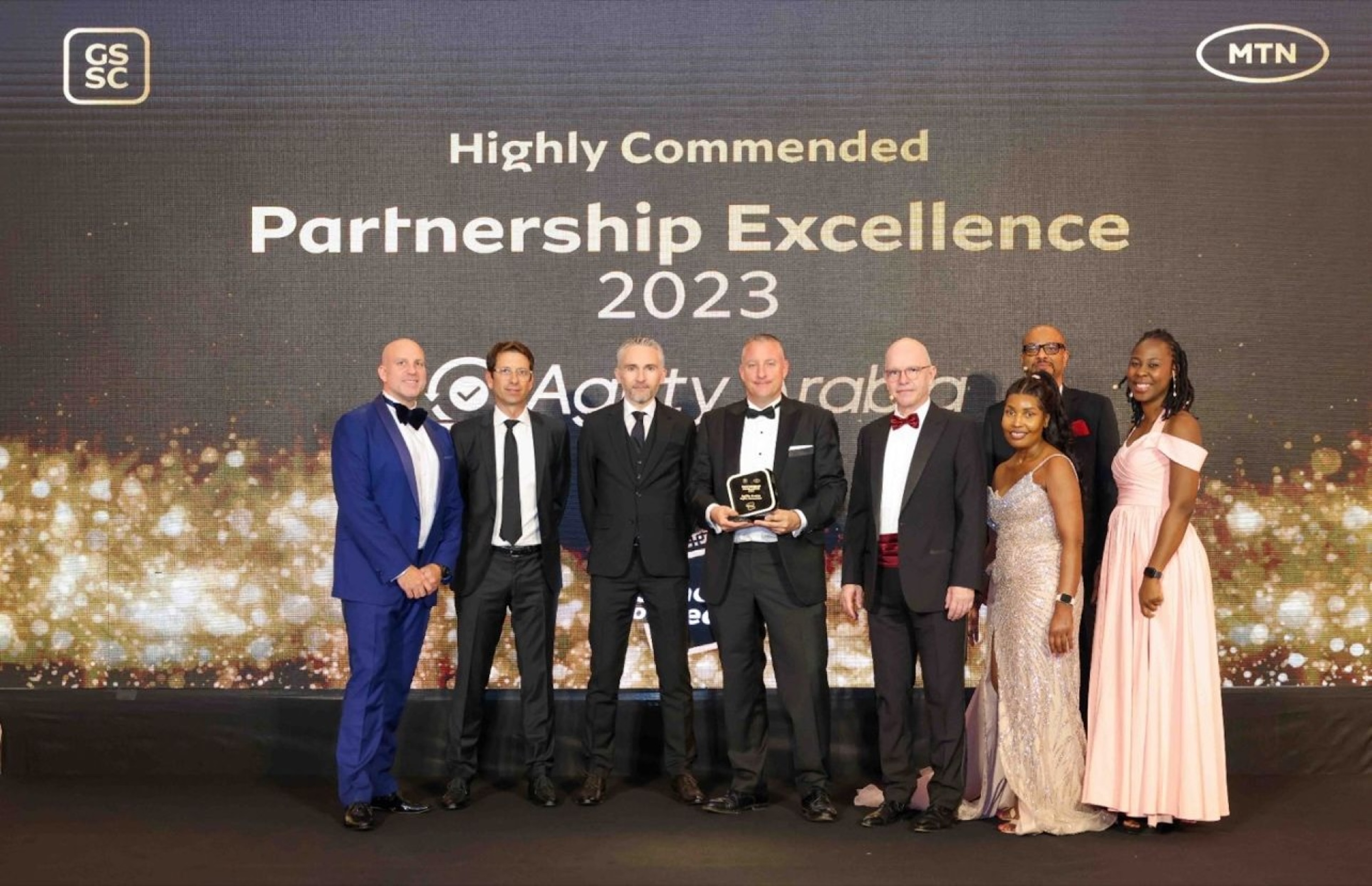
MTN GSSC Lean Agile Procurement Case Study
MTN Group is Africa’s largest mobile network operator, serving more than 291 million customers across 16 markets.
In 2023, MTN’s Global Sourcing and Supply Chain (GSSC) function set out to redesign how procurement work flowed, moving from a linear sourcing process to a more iterative, outcome-led approach.
Agility Arabia supported the programme with training, coaching, and ways-of-working guidance across squads and stakeholders.
Press & coverage: See independent coverage of this announcement and related press releases on our Press & Media page ↗
Key takeaways
- Iterative delivery can work in procurement when ownership and backlogs are clear.
- The biggest early unlock is reducing decision latency across stakeholders.
- Coaching matters most when teams are learning new accountabilities and routines.
- Metrics and feedback loops help build credibility beyond “Agile theatre”.
- Scaling is easier when ways of working are standardised, but applied pragmatically.
Challenge / why this matters
Procurement functions are often perceived as bottlenecks in large organisations.
In MTN’s case, Operating Companies (OpCos) had diverse and time-sensitive needs across multiple markets. Historically, long cycles and heavy governance created delays.
GSSC’s goal was to reduce sourcing throughput time and improve responsiveness, without losing control of large strategic work.
A second challenge was change adoption. Many people were new to Agile concepts, and the organisation needed consistent alignment across time zones and cultures.
For a useful lens on scaling consistency without forcing a one-size-fits-all model, see Nexus as a scaling option ↗.
Approach / how it works
The transformation combined operating model changes, training, and hands-on coaching, with a focus on practical routines and measurable outcomes.
1) Restructure into cross-functional squads
In Q1 2023, GSSC aligned domain areas around dedicated squads and created cross-functional teams across core areas of GSSC operations.
This helped reduce handoffs and improve clarity on ownership.
2) Define success metrics and make progress visible
Transformation success metrics were identified and tracked.
An extensive, prioritised roadmap was created between OpCos and GSSC to increase transparency on what mattered most.
3) Train and coach common ways of working
Key practices were trained and coached across the department to support consistent application. This included:
- Clear accountabilities and ownership
- Use of Agile artefacts and Scrum Events (aka Ceremonies)
- Customer needs identification and backlog creation
- Relative estimation and prioritisation
- Working agreements and feedback habits
New joiners received regular training, and refresher sessions helped improve retention.
4) Use maturity scoring to guide coaching intensity
Agility Arabia’s maturity scoring framework was used to assess team progression against criteria such as:
- Structure and quality of Scrum Events (aka Ceremonies)
- Fulfilment of key accountabilities
- Team behaviours and cross-functional collaboration
- Handling blockers and impediments effectively ↗
The intent was to target coaching where it would have the greatest impact.
5) Scale gradually, not via “big bang”
A phased approach was used to balance business-as-usual delivery with adoption of new routines.
This reduced disruption, but it also introduced temporary inconsistency across teams, which then needed active management.
Related reading
- Read Agile for distributed teams ↗
- Explore Agile adoption vs transformation ↗
- Telco procurement transformation: lessons from MTN's 55% cycle-time cut ↗
Results / expected outcomes
MTN reported outcomes over roughly six months, including:
- Strategic RFP cycle time reductions of 55% or more on large initiatives
- 84% of the department actively participating in Agile projects (by end of Q2 2023)
- Internal sentiment improvements, including reported increases in NPS for the framework
- Increased confidence levels in understanding and using the approach (reported via surveys)
Andrew Savage (Global Lead Procurement Excellence) shared that coaching and alignment helped drive participation and measurable improvements, including a reported reduction in strategic RFP cycle times and improved NPS outcomes.
The programme also aimed to shift procurement from a process-heavy function into a clearer value creation partner, supported by transparency and shorter feedback loops.
Want to replicate these results? Our Procurement Agility service ↗ is the structured programme behind MTN's outcomes above.
If you want a practical way to choose measures that reflect value (not activity), see Agile metrics that drive outcomes ↗.
Practical takeaways / what to do next
If you’re applying Agile in procurement (or any non-software domain), these steps reduce risk:
- Start with one or two value streams where outcomes are measurable.
- Make work visible via a single prioritised backlog per squad, with one clear owner.
- Use short, recurring cadences to reduce decision latency and surface blockers early.
- Train stakeholders, not just teams. Most friction comes from outside the squad.
- Use maturity scoring to decide where coaching is needed most.
- Treat consistency as “shared principles and artefacts”, not identical rituals.
- Expect a dip during change. Use feedback loops to tighten the model quickly.
Relevant training courses
- Explore Applying Professional Scrum ↗
- Explore Professional Scrum Master II ↗
- Explore Product Backlog Management Skills ↗
- Explore Evidence-Based Management ↗
Conclusion
MTN’s GSSC transformation is a useful example of applying iterative delivery and feedback loops in a non-software function.
The reported outcomes suggest that procurement can improve speed and responsiveness when teams are structured for ownership, supported by training, and coached through the early maturity stages.
The next steps described by MTN point to deeper enterprise rollout, stronger coaching capability, and continued capability uplift across Scrum Master roles.
Contact us
If you want to explore what an Agile procurement operating model could look like in your organisation, we can help you assess delivery friction, identify quick wins, and design a practical rollout plan.
Learn more about our Procurement Agility service ↗, the structured approach behind this transformation.
Related reading: Agile procurement consulting in the GCC: what good looks like →
Not sure where your organisation stands today? Try our free Agile Readiness Assessment (7 questions, 2-3 minutes, instant results).