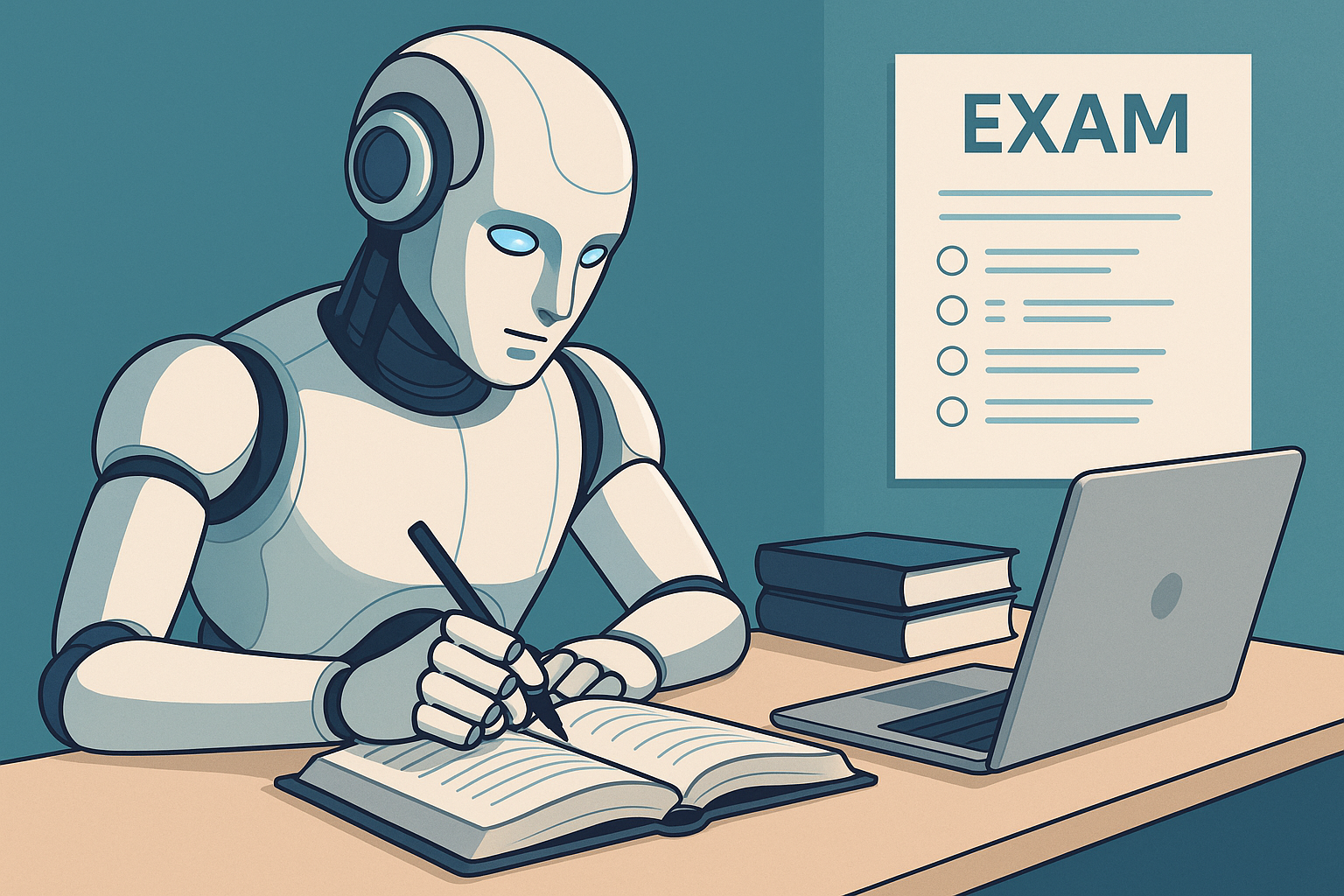
How to Prepare for Exams Using AI (the Right Way)
AI is no longer a futuristic concept, it’s embedded in the way we work, shop, and learn. For anyone preparing for professional qualifications (Agile certifications, leadership pathways, or industry exams), AI tools now sit one click away.
But while some learners ask “Can AI help me pass an exam?”, the better question is: how can I use AI to prepare effectively, without cutting corners?
This guide focuses on practical, ethical ways to use AI for exam preparation, and why using AI to “cheat” is a dead end.
Key takeaways
- AI can help you study faster by clarifying concepts, generating practice, and exposing knowledge gaps.
- It’s best used as a study coach, not an answer engine.
- AI output can be plausible but wrong, so always validate against official materials.
- Scenario practice (realistic “what would you do?” prompts) is where AI adds real value.
- A blended approach (official content + AI practice + coaching) is usually the safest route.
Challenge: why AI exam “shortcuts” don’t work (and why it matters)
Generative AI tools can process exam-style questions and produce answers instantly. That creates a clear temptation: paste the question in, get an answer back, tick the box.
The problem is reliability and integrity:
- AI can sound confident while being incorrect
- you may pass by luck but struggle in real-world situations
- holding a qualification you haven’t earned properly creates professional risk (and reputational risk)
If you want a practical example of how AI performs in real situations (beyond study use), this UAE-focused case study is worth reading:
Approach: how to use AI for exam preparation (ethically)
The best way to think about AI is: augment, don’t replace.
Use AI to improve the process of learning:
- make complex topics simpler
- structure your study plan
- increase repetition and retrieval practice
- simulate real-world scenarios
- highlight what you don’t yet understand
Then validate what matters using trusted sources (official guides, course content, and reputable trainers).
Results: expected outcomes (without inflated claims)
When used well, AI-supported study often leads to:
- faster comprehension of difficult concepts
- better structure and consistency in study habits
- earlier identification of weak areas
- more practice opportunities (questions, flashcards, scenarios)
- stronger confidence because you can explain “why”, not just “what”
What it doesn’t guarantee is a pass. You still need to do the learning, especially for judgement-based questions that test understanding, not memory.
Practical takeaways: 5 ways to use AI to study smarter
1) Break down complex topics into plain English
Use AI to simplify theory, translate jargon, and create step-by-step explanations.
Examples of prompts:
- “Explain this concept like I’m new to the topic, then give a practical example.”
- “Summarise this page into 5 key points and 3 ‘common misconceptions’.”
Tip: always cross-check critical definitions against official sources.
2) Create a personalised study plan you can stick to
Ask AI to design a structured plan based on your timeline and availability:
- daily goals leading up to the exam
- weekly review loops
- spaced repetition suggestions
- “exam week” revision schedule
This turns a large body of content into manageable work.
3) Generate practice questions and mock exams
AI is useful for producing question formats and helping you practise under time pressure.
Use it to:
- create multiple-choice questions by topic
- generate short scenario questions
- create a timed mock exam set (e.g., 20 questions)
Important: treat AI-generated answers as drafts, validate them, and focus on the reasoning.
4) Identify knowledge gaps through active recall
AI is strong at helping you test yourself.
Try:
- flashcards based on your weak areas
- quick quizzes at the end of each study session
- “explain your answer” prompts to check understanding
This builds a practical feedback loop: learn → test → adjust.
5) Practise real-world scenarios (where AI shines)
For many Agile certifications, scenario judgement matters. AI can roleplay realistic situations, such as:
- “A stakeholder asks for extra scope mid-iteration, how do you respond?”
- “Requirements are unclear, how do you reduce risk and align stakeholders?”
- “A team is overloaded, what trade-offs would you discuss?”
This kind of practice helps you prepare for both exam questions and workplace application.
If you want an example of how Agile principles translate into measurable delivery outcomes in a real organisation, this is a useful read:
If you want structured support alongside self-study (formal training or 1:1 coaching to build real exam-day confidence) explore our training courses or 1:1 coaching.
Conclusion
AI is changing how people learn, but the advantage comes from using it wisely. If you treat AI as a study partner rather than a shortcut, you can learn faster, retain more, and walk into the exam with genuine confidence.
A practical rule: use AI to improve your learning habits, not to outsource your thinking.
Contact us
If you’re preparing for Agile certifications and want a practical, structured study approach (including how to use AI responsibly), we can help you choose a low-disruption path, from self-study structure through to targeted coaching.
Contact us to book a 30-minute diagnostic call and we’ll recommend the most sensible next step based on your goals and timeline.