In-house vs public Agile training: which is right for your team?
Key takeaways
- A public course suits one or two people who need a recognised certification and an outside view.
- In-house training suits a whole team that needs to change how it works together, using its own backlog.
- Compare the total cost for the group, not the price per seat.
- The format matters less than what happens in the weeks after the classroom.
Most training requests we receive start with the same question: should we send people on a public course, or bring a trainer in? Both work. They do different jobs, and choosing the wrong one is the most common reason training budgets produce certificates but no change in delivery.
Two different jobs
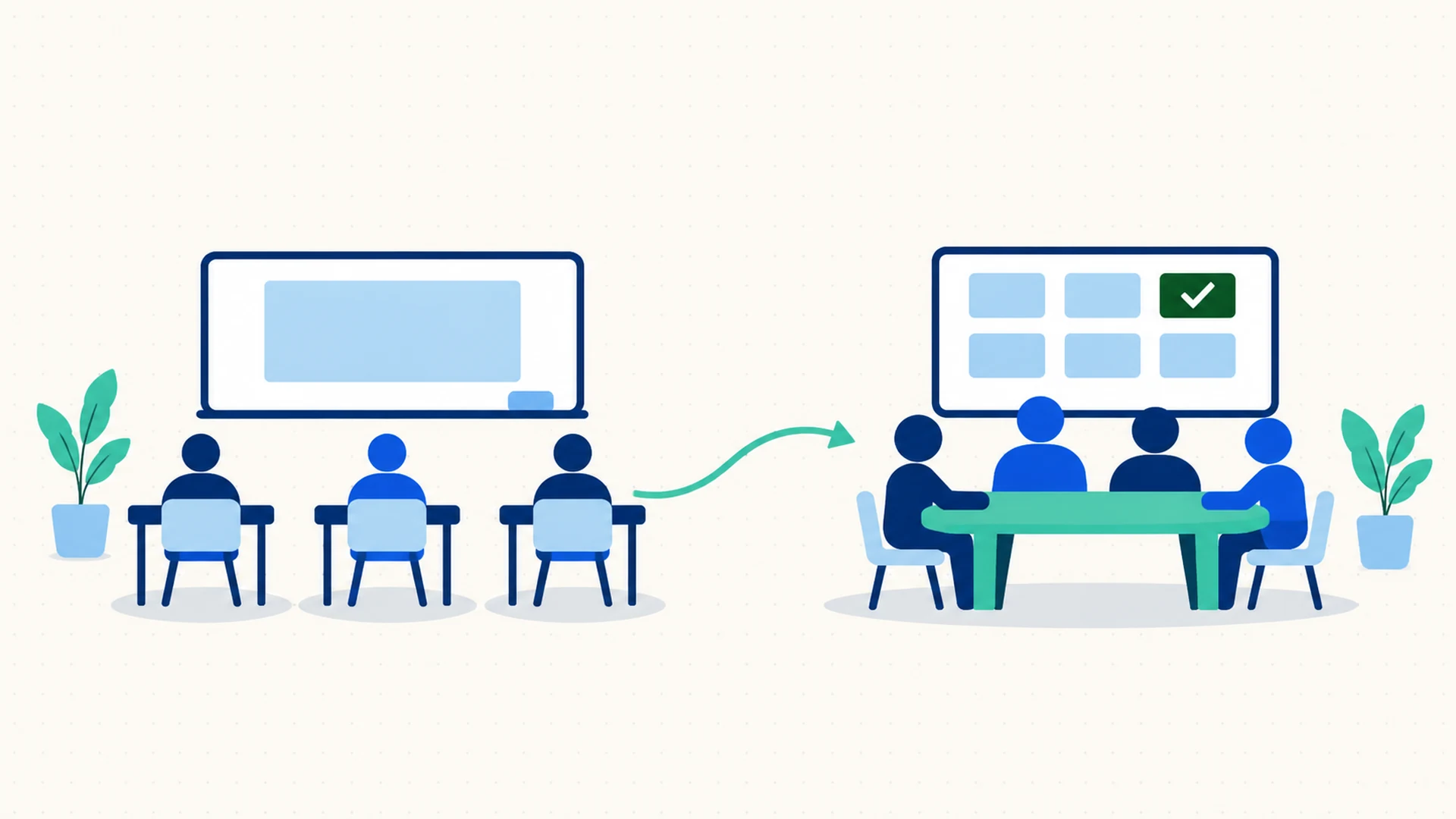
A public course teaches the framework to individuals. People from different organisations sit in the same room, learn Scrum or Kanban as designed, and usually leave with a certification. Our public Agile training courses are run this way, as certified Scrum.org classes.
In-house training teaches one team to use the framework on its own work. Everyone hears the same thing at the same time, the exercises use the team's real backlog, and the conversation covers the constraints that team actually has: its approvals, its stakeholders, its tools.
When a public course is the better choice
- One to three people need the training, not a whole team.
- The goal is a personal credential, such as Professional Scrum Master. If you are comparing certification bodies, see Scrum.org vs Scrum Alliance.
- You want your people to hear how other organisations work.
- A new Scrum Master or Product Owner is joining a team that already works well.
When in-house training is the better choice
- A whole team, or several, needs to start working differently at the same time.
- The team already runs the Scrum events but delivery has not improved. This is the pattern we describe in the curse of Mechanical Scrum, and a generic course rarely fixes it.
- The work is not software, so standard course examples do not translate.
- Leaders need to be in the room, because the blockers sit above the team.
This is what our in-house Agile training in Dubai and the UAE is built for: a short discovery first, one to three days of training on your own work, then a follow-up session a few weeks later.
Cost: compare totals, not seat prices
Public courses are priced per person. In-house programmes are priced per group. Ours start from AED 18,000 excluding VAT for a one-day programme with two trainers for up to 16 people, and a single trainer at a lower fee for groups of up to 8 or live online delivery.
The comparison is simple: multiply the public seat price by your headcount, add travel and time away, and set that against the fixed fee for the group. For one or two people, public wins. For a full team, in-house is usually cheaper per head, and you choose the dates.
What happens after the classroom matters more than the format
Training of either kind fades fast if nothing changes on Monday. We have written about closing the gap between Agile training and real-world practice, and the short version is that teams need support while they apply it. That can be a follow-up session or Agile coaching during the team's own Sprints.
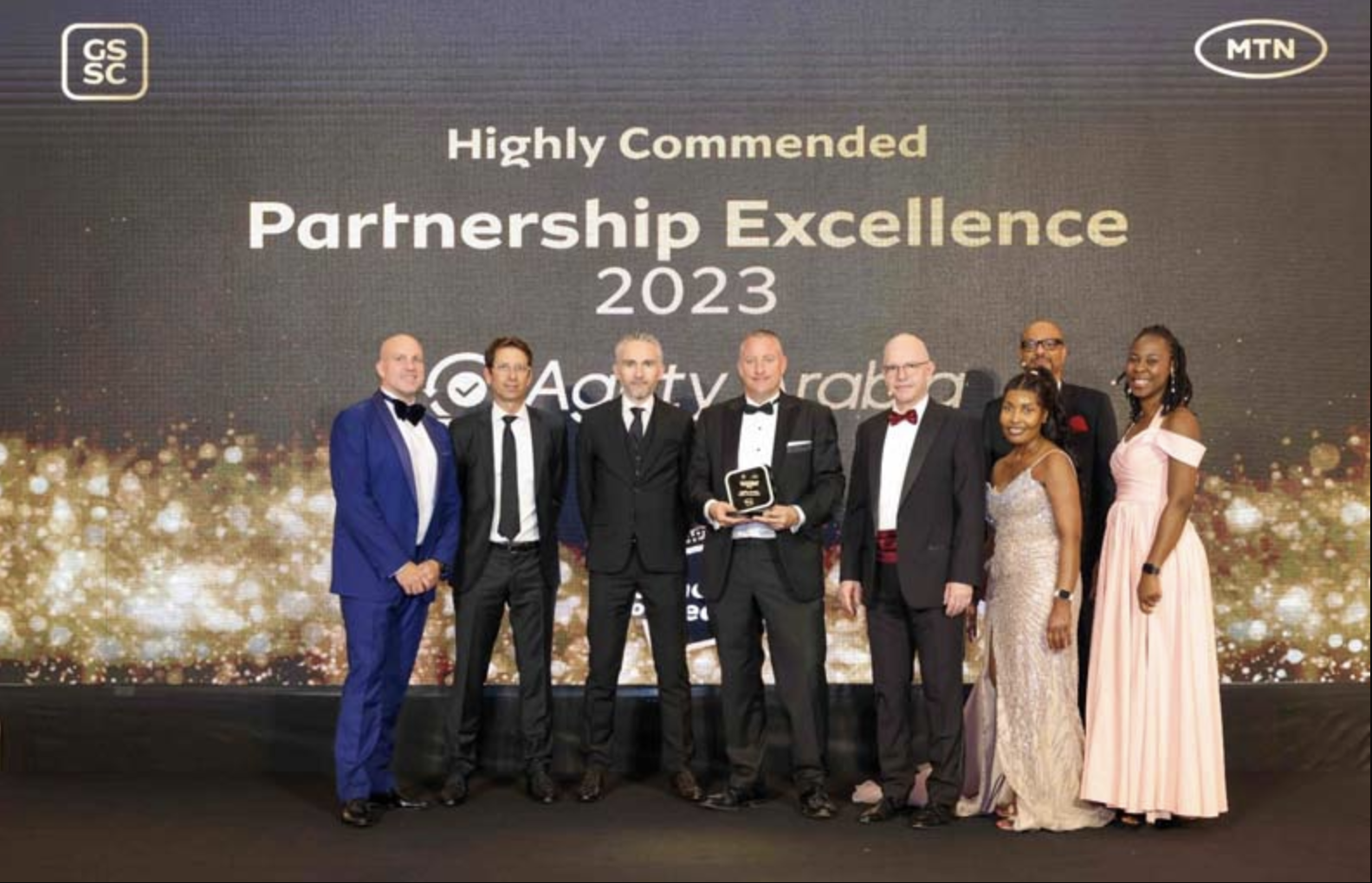
Our work with MTN's Global Shared Services Centre shows what that looks like at scale. It was built around the team's own procurement work, with more than 80% of the organisation taking part, and it cut strategic RFP cycle times by up to 55%. At the smaller end, we ran a two-day offsite workshop for Acwa's talent management team on its new operating model.
You can combine them
The two formats are not exclusive. As the first Scrum.org Professional Training Network member in the UAE, we can add Scrum.org assessments to an in-house programme, so the team gets tailored training and individuals still earn a certification.
A quick way to decide
- How many people need it? Fewer than four points to public.
- Is the goal a certificate, or a change in how the team delivers?
- Is the work software, or something standard examples will not fit?
- Do leaders need to take part?
- Who will support the team afterwards?
If you are unsure where the team stands today, the free Agile Readiness Assessment takes seven questions and two to three minutes.
Contact us
Tell us how many people, onsite or online, and what you want the team to do differently. We will come back with a short proposal and a fixed course fee. Contact us.