Agile Transformation in Banking: Why Pilot Readiness Matters
Agile transformation in banking often starts with good intent. Leaders want faster delivery, better customer experiences, stronger collaboration, and more responsive digital services.
But in many regional banks, the challenge is not whether Agile is understood in theory. The challenge is whether Agile is connected to real banking priorities, governance, risk, compliance, and delivery outcomes.
This matters for banks in Jordan, Iraq, Oman, and the wider region. Many institutions are modernising digital channels, payments, customer journeys, and internal delivery models. The banks that make progress usually avoid treating Agile as a set of ceremonies or a training exercise.
They start with pilot readiness.
For banks that need practical support beyond awareness, our Agile coaching and transformation work helps connect leadership, governance, teams, and delivery outcomes.
Key takeaways
- Agile transformation in banking should start with a clear business problem, not a framework.
- Pilot readiness helps banks test new ways of working before scaling too quickly.
- Risk, compliance, technology, business, and leadership teams need to be involved early.
- A practical pilot can create a safer bridge between Agile learning and delivery change.
- Regional banks should focus on governance, delivery confidence, and measurable outcomes before wider rollout.
A structured Agile maturity assessment can help leaders understand where Agile is working, where it is stuck, and what should be tested next.
Why Agile transformation in banking often stalls
Many banks introduce Agile because they want to move faster. They may create squads, run Scrum Events, appoint Product Owners, or introduce new planning rhythms.
Some banks also explore Scaled Agile approaches, but the key question is whether the model improves decision-making, delivery flow, and business outcomes. For related context, see our article on Scaled Agile alternatives and delivery models.
These steps can help, but they do not guarantee better outcomes.
Agile transformation in banking often stalls when the organisation focuses on visible activity rather than system-level change.
Common signs include:
- Teams are running Agile events, but priorities still change without clear decisions.
- Technology and business teams collaborate, but governance still follows old approval paths.
- Digital initiatives move forward, but risk and compliance are involved too late.
- Leaders ask for outcomes, but reporting still focuses on tasks and activity.
- Teams receive Agile training, but do not have a real pilot to apply it.
In banking, this creates a particular problem. Agile cannot sit outside governance, compliance, security, audit, risk, and portfolio management. It has to work with them.
That is why pilot readiness is often a more useful starting point than a broad Agile rollout.
Why pilot readiness matters
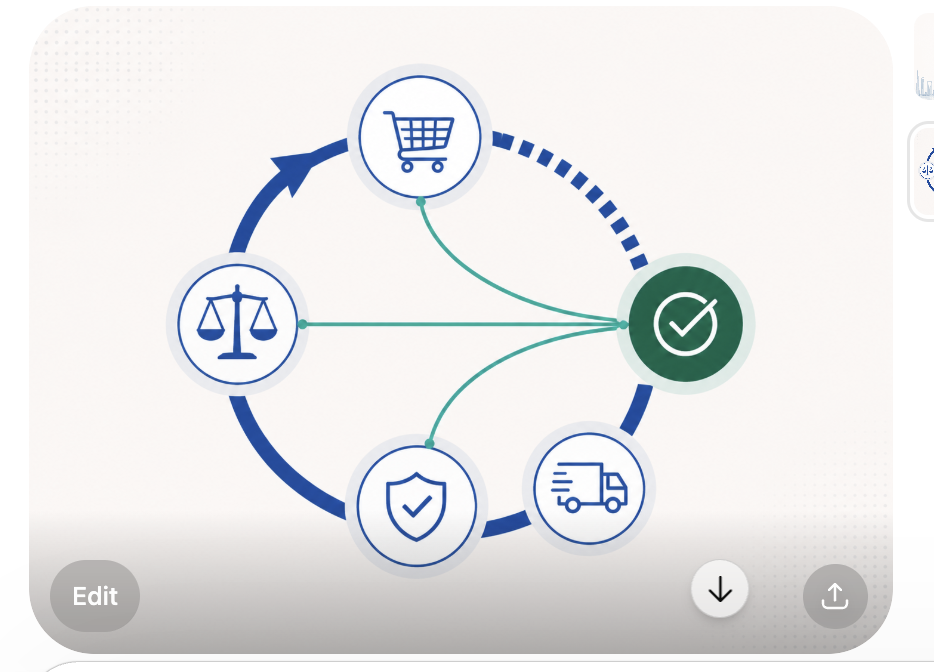
Pilot readiness means the bank is prepared to test Agile ways of working on a real business problem.
It is not just about whether people understand Agile terms. It is about whether the right people, decisions, governance, and delivery conditions are in place.
A good pilot gives the bank a controlled way to learn.
It helps leaders see:
- Whether Agile can work in the bank’s real environment.
- Where governance or decision-making slows delivery.
- How business, technology, risk, compliance, and operations work together.
- What support teams need before wider adoption.
- Which measures should be used to judge progress.
For banks in Jordan, Iraq, Oman, and similar regional markets, this matters because transformation capacity is often uneven. Some teams may be ready for new ways of working. Others may still need foundational capability, clearer sponsorship, or stronger delivery discipline.
A pilot helps the bank learn before it scales.
What a banking Agile pilot should include
A banking Agile pilot should not be chosen only because it is visible or urgent.
It should be chosen because it is meaningful, manageable, and useful for learning.
1. A clear business problem
The pilot should connect to a real banking priority.
Examples may include:
- Digital wallet adoption.
- Customer onboarding.
- Mobile banking improvements.
- Payments journey improvement.
- SME banking service enhancement.
- Internal process digitisation.
The key question is simple:
What business outcome should this pilot help improve?
Without that answer, the pilot can become another delivery activity rather than a transformation learning opportunity.
2. Cross-functional participation
Banking transformation is rarely owned by one function.
A useful pilot should involve the right mix of people from the start.
This may include:
- Retail Banking.
- Digital Channels.
- IT.
- Security.
- Risk and Compliance.
- ePMO or PMO.
- Operations.
- Product or proposition teams.
- Senior sponsors.
This reduces the risk of Agile becoming isolated inside technology teams.
3. Leadership sponsorship
A pilot needs visible leadership support.
This does not mean leaders should manage every detail. It means they should help remove blockers, clarify priorities, and protect the pilot from conflicting demands.
Leadership sponsorship is especially important when the pilot touches governance, funding, risk, compliance, or customer-facing digital services.
4. Practical governance
Agile does not remove governance.
In banking, the better question is:
How can governance support faster learning while still managing risk?
A pilot should clarify:
- Who can make decisions.
- What approvals are required.
- How risk and compliance will be involved.
- What reporting is useful.
- How progress will be reviewed.
This helps the bank avoid two common extremes.
One extreme is uncontrolled experimentation. The other is so much governance that the pilot cannot move.
5. Useful measures
A pilot needs simple measures.
These should not be limited to Agile activity, such as number of meetings held or backlog items created.
Better measures may include:
- Clarity of priority.
- Decision speed.
- Stakeholder alignment.
- Delivery predictability.
- Risk and compliance involvement.
- Customer or user feedback.
- Learning captured for wider rollout.
Where hard metrics are not yet available, the bank should at least define what evidence it expects to collect.
Example from a regional bank in Jordan
Agility Arabia recently supported a regional bank in Jordan with banking transformation work involving 60 participants.
The engagement included people from Retail Banking, ePMO, IT, Security, Risk and Compliance, Digital Channels, and senior leadership, including the COO.
The work focused on building a shared foundation for Agile and shaping an eWallet digital platform as a practical pilot project.
This was not positioned as a large-scale transformation outcome. It was an early step to help the bank create common understanding and connect Agile learning to a real banking use case.
The early outcomes were practical:
- 60 participants built a shared foundational understanding of Agile.
- Business, technology, governance, risk, and digital teams were involved.
- Senior leadership participated in the conversation.
- An eWallet digital platform was shaped as a pilot project.
- The bank created a clearer starting point for applying Agile to banking transformation.
Further delivery, customer, financial, or operational outcomes should only be assessed once the pilot produces measurable evidence.
This is the right level of ambition for many banks at the start of their Agile transformation journey.
What this means for banks in Jordan, Iraq, and Oman
Banks in Jordan, Iraq, and Oman are not all at the same stage of transformation.
Some are improving digital channels. Some are modernising internal delivery. Some are strengthening governance. Others are building foundational capability before larger transformation work.
The common challenge is often the same:
How do we move from Agile awareness to practical transformation delivery?
For many banks, the answer is not to copy a model from a more mature market.
A better approach is to assess the current environment, identify one meaningful pilot, and create the conditions for that pilot to work.
This is especially important where:
- Agile knowledge is uneven.
- Digital transformation is increasing.
- Governance and approval paths are complex.
- Risk and compliance need earlier involvement.
- Leadership wants clearer evidence of progress.
- Teams need practical support, not just theory.
A practical route forward
A useful starting point is a Banking Transformation Diagnostic.
This gives leaders a clearer view of where Agile or digital transformation is working, where it is stuck, and what should be tested next.
A diagnostic can review:
- Leadership alignment.
- Governance and decision-making.
- Portfolio and delivery flow.
- Business and technology collaboration.
- Risk and compliance involvement.
- Metrics and outcome visibility.
- Team capability.
- Pilot readiness.
The output should be practical.
It should help the bank decide:
- Which pilot to start with.
- Who needs to be involved.
- What governance needs to change.
- What capability gaps must be addressed.
- What evidence should be collected.
- What support is needed after the pilot begins.
Avoiding common mistakes
Banks do not need to over-complicate the first step.
But they do need to avoid common mistakes.
These include:
- Starting with training before choosing a real business problem.
- Running Agile only inside IT.
- Involving risk and compliance too late.
- Choosing a pilot that is too large or politically sensitive.
- Measuring activity instead of outcomes.
- Scaling too quickly before learning from the pilot.
- Using a framework without adapting it to the bank’s context.
The aim should be controlled learning.
A pilot should be small enough to manage, but important enough to matter.
How Agility Arabia helps
Agility Arabia supports banks and regional organisations that want to improve transformation delivery, governance, operating model effectiveness, and practical capability.
We help leaders and teams move from Agile activity to clearer transformation outcomes.
Our work can include:
- Banking Transformation Diagnostic.
- Pilot readiness review.
- Agile coaching and transformation support.
- Leadership alignment.
- Governance and delivery flow improvement.
- Capability enablement.
- Operating model support.
We do not position Agile as a training exercise. Training may support the work where capability gaps are identified.
We can connect clients to certified training partners where needed.
Conclusion
Agile transformation in banking should not begin with a large-scale rollout.
It should begin with clarity.
Banks need to understand the business problem, involve the right functions, align leadership, design practical governance, and choose a pilot that can create useful evidence.
For banks in Jordan, Iraq, Oman, and the wider region, pilot readiness can provide a practical bridge between Agile awareness and transformation delivery.
It helps the bank learn safely before scaling.
Agile transformation in banking works best when it is connected to real delivery priorities.
Contact us to book a 30-minute consultation and discuss whether a Banking Transformation Diagnostic or pilot-readiness review would be useful for your organisation.
FAQs:
What is Agile transformation in banking?
Agile transformation in banking is the shift towards more adaptive, collaborative, and outcome-focused delivery across business, technology, governance, risk, and operations.
Why do Agile banking initiatives stall?
They often stall when Agile is treated as ceremonies or training, rather than connected to business outcomes, decision-making, governance, and delivery flow.
What is pilot readiness in banking transformation?
Pilot readiness means the bank has a clear business problem, the right participants, leadership support, practical governance, and useful measures before starting an Agile pilot.
Should risk and compliance be involved in an Agile pilot?
Yes. In banking, risk and compliance should be involved early so the pilot can move with control rather than face late-stage approval issues.
Is this relevant for banks in Jordan, Iraq, and Oman?
Yes. Banks in these markets may be modernising digital services and delivery capability, while still needing a practical bridge between Agile awareness and real transformation delivery.